
Education transparency remains a critical issue in Uganda’s education system. Open data can play an important role in helping citizens, parents, and policymakers better understand how educational outcomes are measured and evaluated.
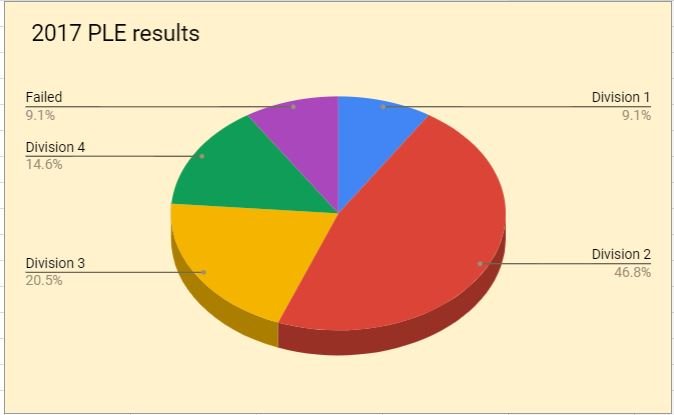
In January 2018, the Ministry of Education and Sports released the Primary Leaving Examination (PLE) results. According to the Ministry, 646,190 candidates sat the examinations. Of these, 57,198 passed in Division One, 293,977 in Division Two, 128,573 in Division Three, and 91,504 in Division Four, while 57,354 candidates failed.
Although the MoES highlighted an improvement in pupils' performance compared with 2016, several pupils and parents were disgruntled and never satisfied with the results.
Where is the problem?
While making a press briefing on the PLE results, the MoES officials noted that pupils failed in subjects that required applying knowledge in problem-solving situations or freely expressing themselves. To them, candidates were more comfortable with questions that are direct and based on recall.
However, key information explaining how these grades are determined is not publicly available. Transparency around grading criteria is essential for parents, students, and educators to understand how academic performance is evaluated. A review of the PLE website by Governance & Evidence Review shows that this information is not publicly available.
For the preparation of future candidates, such information should be in the open and accessible to all parents and citizens. This is not a matter of national security, but one of institutional integrity for the institutions responsible for setting, marking, and supervising national examinations. In the absence of clear official data, alternative explanations about grading standards have circulated on social media. Some claims suggest that grading thresholds may differ between public and private schools, although these claims remain unverified.
Furthermore, the MoES is cognizant of the fact that 13,023,114 Ugandans (31.3 percent) have access to the internet and could use social media to get heard. And if the MoES and UNEB pay a blind eye, the system will be deemed opaque, biased, and, of course, discriminatory. In the absence of official data, alternative explanations have circulated widely on social media, suggesting that grading standards for private schools differ from those applied in government Universal Primary Education schools.
According to the alternative data, a pupil in a public school would need 75 percent to obtain a distinction, while a pupil in a private school would require 94 percent. If this were accurate, the Ministry would be expected to publicly explain its decisions and their justification. More importantly, how does the MoES expect dubbed performers to participate in the next stage of their education? Will they excel or be expelled for mediocre performance in senior schools?
If these claims are inaccurate, the Ministry of Education should publicly clarify the grading process to maintain confidence in the examination system. Without clarification, such claims may erode parents’ trust in the institutions responsible for managing national examinations. In such circumstances, parents may question the value of investing in private schooling if distinctions appear easily attainable elsewhere.
Why education transparency matters for Uganda’s economy and human capital
A lack of transparency in grading systems may undermine merit-based educational outcomes and reduce confidence in the education system. Over time, this can affect the development of skilled human capital needed for economic growth. With a non-transparent system for grading pupils, the MoES and UNEB could be indirectly impeding the performance and excellence of the future workers, innovators, and employees. If students become accustomed to non-merit-based outcomes at an early stage, this may influence their attitudes toward effort, performance, and accountability later in life.
What can the Ministry of Education do differently?
To improve the openness and transparency of the grading system, which are key ingredients of a good democracy, we should have the same grading for private and public schools in Uganda. This will not only restore trust in Uganda’s education system but also produce the best future employees for the nation.
The Ministry could significantly improve transparency by publishing grading parameters on its official website. A publicized memo could bring a lot of transparency instead of making decisions in boardrooms and implementing them across Uganda’s education system. This could help prevent further erosion of transparency within the education system.
One thing is for sure: the government should invest in the UPE schools as private school owners do. This should begin with reconsidering teachers’ salaries, followed by collaborative efforts between parents and the government to jointly contribute to scholastic materials, food, and other learning resources. This will not only improve the learning environment of students but also their performance.
Conclusion
Improving transparency in Uganda’s education system requires greater openness around examination grading systems, stronger communication with parents and citizens, and continued investment in public schools. By making education data publicly accessible, policymakers can strengthen public trust, improve accountability, and better prepare future generations for national development.
