
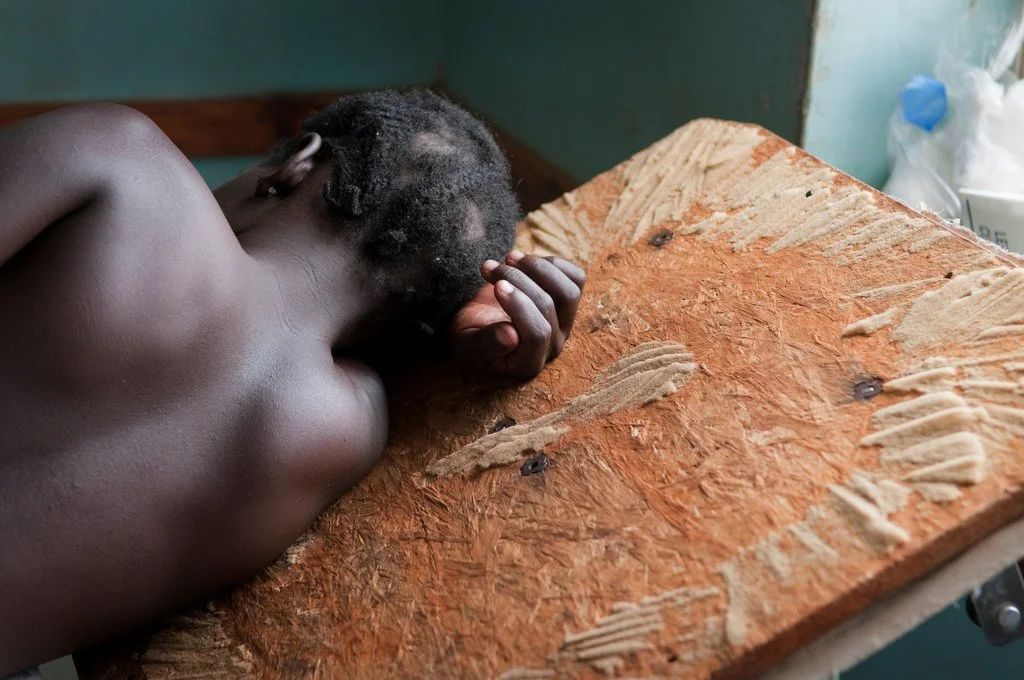
A woman in labor rested in the delivery room of the hospital in Arua (Photo Credit: The New York Times)
Uganda's human development, especially the health sector, is ranked 20th on the continent at a score of 70.3 in the Mo Ibrahim Index of African Governance 2015. To her credit, Uganda’s health sector has registered improvements over the last four financial Years ( 2013/14- 2016/17), including the expansion of provider networks, abolishing of patient user-fees, sustained management of HIV patients, amongst other achievements.
Despite the progressive markers, improvements have been unevenly distributed with a clear and persistent urban-rural gap. Though health-related gender outcomes such as access to maternal health care have improved, they are slowed down by worrisome indicators like high fertility rates.
While a healthy citizenry is paramount for the socio-economic stability and sustainable development of Uganda, this is not a product of the health sector alone, but also improved sector financial allocation, sector prioritization in the national budget, and effective policy implementation.
What is Uganda's health sector's financial standing?
Uganda's health sector remains significantly underfunded, mainly relying on private sources of financing, especially out-of-pocket spending, thus making it difficult to attain sector targets.
At less than 10% of its budget to health care, public spending on health is less than the 15% agreed upon in the Abuja Declaration by heads of African states. The current funding of US$ 27 per capita per annum expenditure on health care is far below the US$ 44 per capita recommended.
In principle, a good health financing system raises adequate funds for health in ways that ensure people can use needed services, and are also protected from financial catastrophe or impoverishment associated with having to pay for them.
Generally, the health status of Ugandans remains poor, characterized by a low level of life expectancy and a high level of mortality, undermining the efforts and investments for social and economic development.
Health sector allocation for the last four financial years
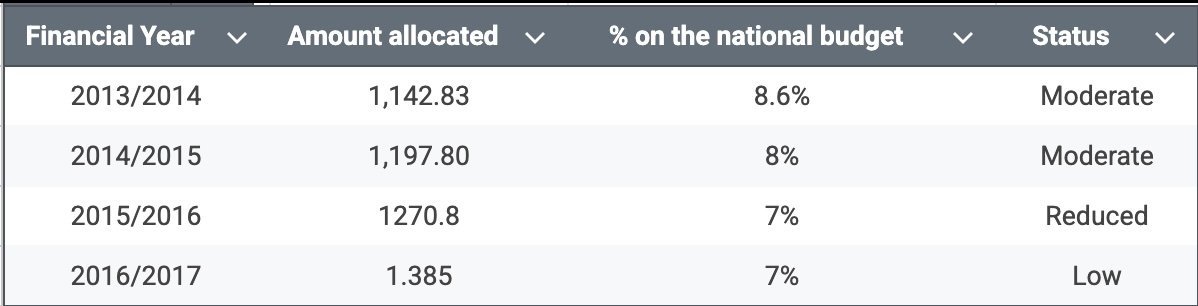
In FY 2013/2014 and 2014/2015, the health sector received approximately 9% of the national budget. In the period, a reduction of maternal mortality rates was seen i.e from 168 per 100,000 in FY 2012/13 to 146 per 100,000 in 2013/14. This was attributed to recruitments i.e deployment of midwives and other health workers, availability of medical equipment to health facilities, and 60% health units having enough medicine.
Despite the moderate financial allocation, Local Government health services financing was inadequate. Financing of primary prevention initiatives at the district level was minimal, thus leaving Civil society Organizations to fill gaps. Further still, recurrent budgets under the Primary Health Care (PHC) grant still show limited improvement.
In FY 2014/2015 - 2015/2016, sectoral budget allocation was reduced from 8% -7%. At 7%, nine hospitals were constructed with World Bank support equivalent to US$ 52 million. i.e Moroto, Mityana, Nakaseke, Kiryandongo, amongst others. Ten (10) ambulances for the Kampala metropolitan area were procured by the Ministry of Health, contributing to a reduction in the continued Maternal Mortality Ratio through implementation and distribution of Emergency Obstetric Care (EmONC) lifesaving medicines.
Projections for 2017/2018 Health Sector Performance.
In FY 2017/18, the continuous implementation of a plan to accelerate investments in maternal, newborn, and child health is underway. This proposes five strategic shifts reflecting a paradigm shift in the reproductive, maternal, neonatal, child, and adolescent health(RMNCAH) agenda. i.e targeting areas with the highest number of deaths, increasing access for high-burden populations, placing emphasis on evidence-based high-impact interventions, amongst other plans.
Whereas the Ministry of Health has outlined good proposals to advance the health standards of Uganda’s citizens, achievement is doubtful if the health sector budget is being reduced year after year. With a limited budget allocation, the ministry has little to deliver.
Though the burden of maternal and perinatal deaths was addressed at the policy level by launching and beginning the Implementation of a reproductive health maternal, newborn and child health (RHMNCH) sharpened plan 2013 to accelerate the reduction of maternal, newborn, and child mortality; sectoral priority to attract, recruit and retain staff to offer Maternal and Newborn care services could remain on paper due to continuous sectoral cuts.
Going Forward
Prioritizing health sector financing in the national budget is key for implementation of the sectoral plans, ensuring universal health coverage and improving service delivery for the betterment of Ugandans health services. Adequate financing of the health sector will provide all people with access to needed health services (including prevention, promotion, treatment, and rehabilitation) of sufficient quality to be effective and ensure that the use of these services does not expose citizens to financial hardships, who mainly depend on 2 dollars a day for survival.
