
New York City offers extraordinary economic opportunity. But housing costs, transportation expenses, commuting time, childcare, wages, and fragmented public systems determine who can realistically remain connected to it.
POLICY TO POCKET · NEW YORK CITY
August 26, 2026 • Research : Dylan Power, PhD Research direction: Joy Namunoga, MPA

Photo by Luca Bravo on Unsplash
Three things to know
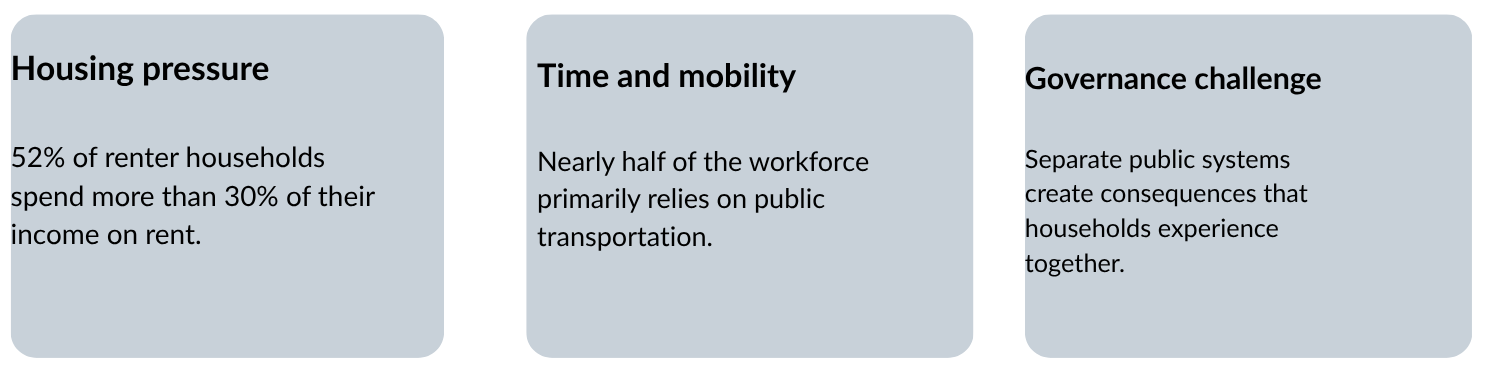
Three findings on housing pressure, transportation reliance, and fragmented public systems in New York City.
What Evidence Shows
Rent tells only part of the story. Housing location shapes commuting costs, time, childcare pressures, and practical access to jobs and services.
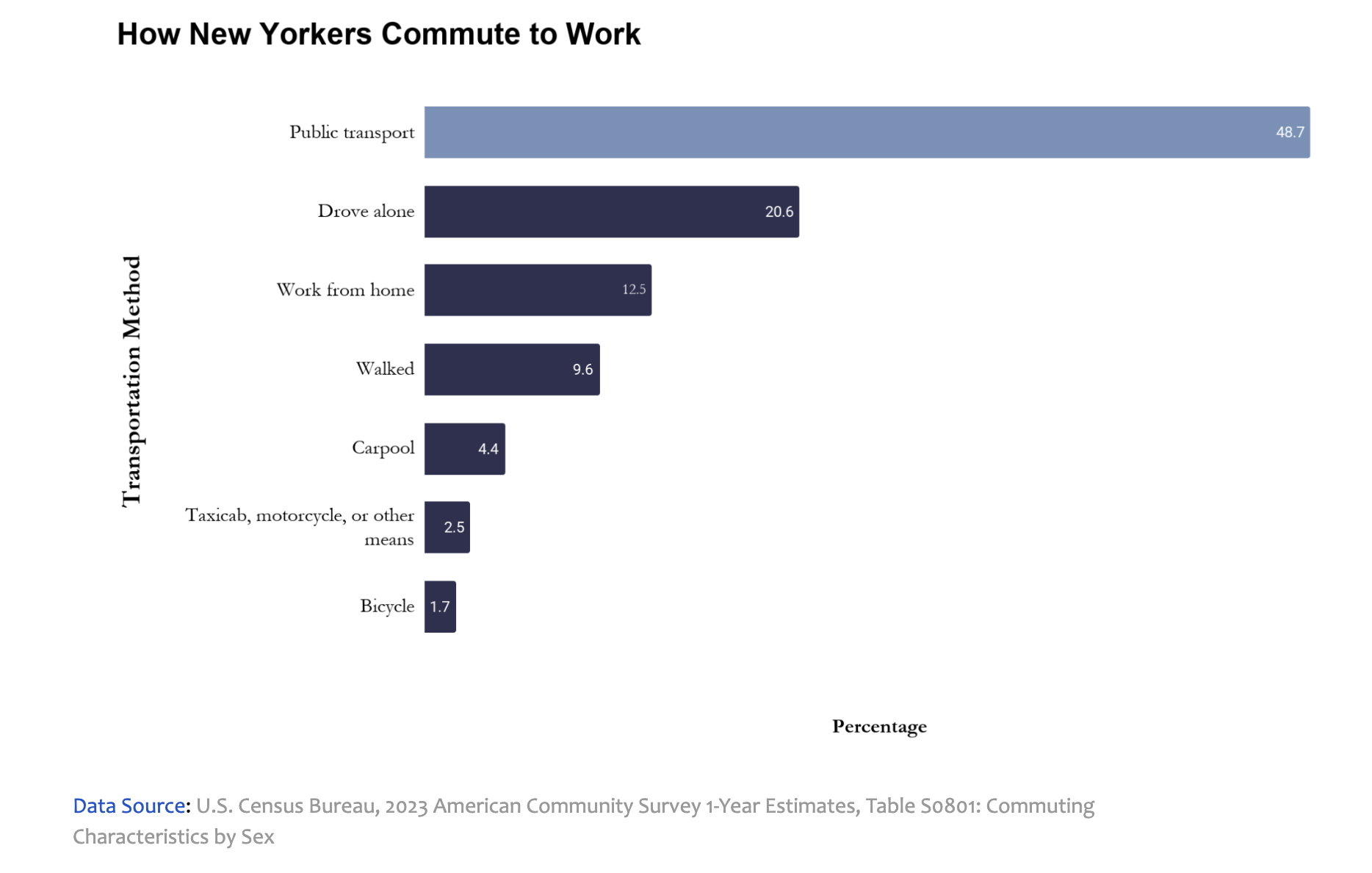
Bar chart showing how New Yorkers commute to work, with public transportation representing 48.7 percent.
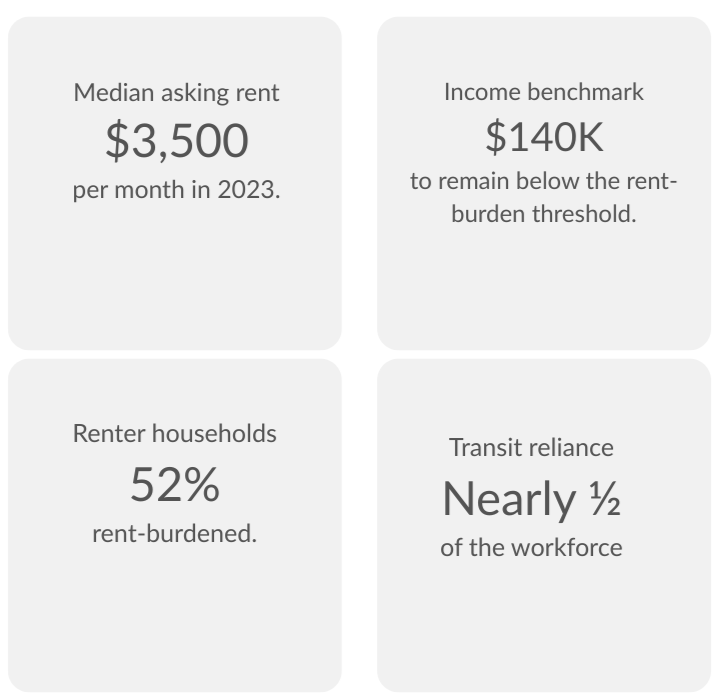
Four indicators covering asking rent, income requirements, rent burden, and public transportation reliance.
The geography of opportunity
Housing location affects access to employment, transportation, schools, and essential infrastructure.
Source: New York City Housing Authority (NYCHA) Developments
THE COST OF PROXIMITY
What must a household spend, travel, reorganize, or give up to remain connected to opportunity?
Households do not experience these systems separately. Their costs and consequences arrive together in the same budget and the same twenty-four- hour day.
A governance challenge
Housing, transportation, labor, childcare, and land use are governed through separate institutions.
Bottom line
New York City's affordability challenge is about more than the price of living in the city. It is about the price of remaining connected to what the city offers.
Research and editorial team
Research • Dylan Power, PhD
Research direction • Joy Namunoga, MPA
Technical editing • Hannah Le
Policy editorial lead • Martina Nicholson
Related: Policy to Pocket — Philadelphia
